
Introduction
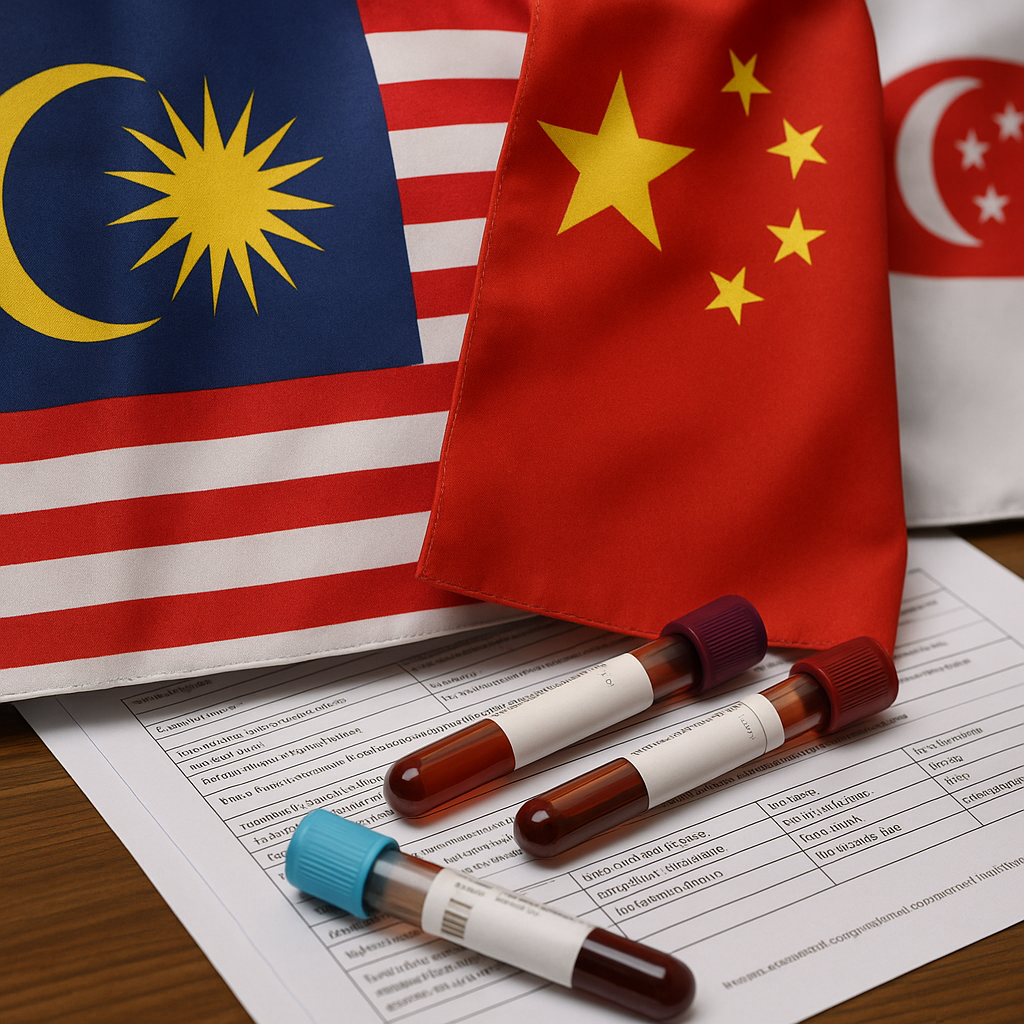
ASEAN continues to take major steps toward regional regulatory convergence in medical devices, with Malaysia emerging as a driving force behind innovative reliance models. Following the successful Malaysia–China Regulatory Reliance Programme, Malaysia and Singapore have now launched a joint pilot to fast-track medical device registrations across both nations.
These bilateral frameworks are designed to simplify regulatory reviews, reduce duplication, and accelerate patient access to safe and effective medical technologies — setting a precedent for regional integration under the Global Harmonization Working Party (GHWP).
Malaysia–China Regulatory Reliance Programme: Pioneering Cross-Border Cooperation
Background and Objective
Launched on 30 July 2025, the Malaysia–China Medical Device Regulatory Reliance Programme (Pilot Phase I) marked the world’s first reciprocal recognition model under GHWP. The initiative follows a 2023 MOU between Malaysia’s Medical Device Authority (MDA) and China’s National Medical Products Administration (NMPA), aimed at mutual reliance and faster market access.
Implementation period: 30 July – 30 September 2025
Scope: In vitro diagnostic (IVD) devices
Goal: To leverage trusted foreign approvals and reduce redundant assessments.
Key Features and Eligibility
For Chinese IVD manufacturers, the pilot enables market access into Malaysia under the Malaysia Verification Pathway, provided devices are:
- Class II (approved by a provincial MPA) or Class III (approved by NMPA)
- Not rebranded or relabelled
- Limited to six applications per manufacturer
- Prioritized if addressing rare diseases or innovative technologies
For Malaysian manufacturers, the programme grants reciprocal access to China through its Green Channel for Class B, C, or D IVDs approved by MDA.
Category | Chinese-made IVDs | Malaysian-made IVDs |
Regulatory Route | Malaysia Verification Pathway | China Green Channel |
Device Class | Class II (provincial) or III (NMPA) | Class B, C, or D |
Application Limit | 6 applications | 6 applications |
Review Timeframe | ~30 working days | ~60 calendar days |
Exclusions | Rebranders, relabelers, assemblers | Rebranders, relabelers, assemblers |
This pilot not only streamlines approvals but also fosters mutual trust and harmonization between regulatory systems, paving the way for expanded ASEAN cooperation.
Malaysia–Singapore Regulatory Reliance Pilot: Streamlining ASEAN Approvals
Programme Overview
Building on the momentum from the China collaboration, Malaysia and Singapore launched their Regulatory Reliance Pilot on 1 September 2025 under an MOU signed on 22 August 2025 between MDA and Singapore’s Health Sciences Authority (HSA).
The six-month pilot (1 September 2025 – 28 February 2026) aims to test a mutual reliance pathway where each authority can reference the other’s prior approvals to accelerate device registration.
Objectives
- Faster approvals: Use reliance on trusted regulatory decisions
- Reduced duplication: Eliminate redundant reviews
- Earlier patient access: Facilitate availability of safe and innovative devices
Operational Details
- For Malaysia: Devices already approved by HSA can undergo an abridged Conformity Assessment Body (CAB) review, reducing timelines from 60 working days to ~30 days.
- For Singapore: Devices registered with MDA gain an abridged review pathway, achieving up to 30% shorter timelines.
Origin of Device | Fast-Track Pathway | Expected Timeline |
Singapore (HSA) | Entry into Malaysia via abridged CAB review | ~30 working days |
Malaysia (MDA) | Entry into Singapore via abridged review | ~30% faster than standard route |
At the end of the pilot, both agencies will evaluate performance, gather feedback, and consider a permanent implementation of the reliance programme.
Conformity Assessment Bodies (CABs): The Cornerstone of Malaysia’s Approval Process
Before any reliance-based or standard registration can proceed, manufacturers must understand Malaysia’s Conformity Assessment Body (CAB) system — the foundation of its regulatory framework.
A CAB is an independent MDA-approved organization that verifies medical devices’ compliance with Essential Principles of Safety and Performance (EPSP) under the Medical Device Act 2012 (Act 737).
Device Classification & CAB Requirements
Class | Example Devices | CAB Assessment |
Class A | Examination gloves, hospital beds | Exempt |
Class B | Contact lenses, dental materials | Required |
Class C | Ventilators, implants | Required |
Class D | Drug-eluting stents | Required |
Assessment Routes
- Verification Route:
· For devices already approved by reference regulators (FDA, CE, TGA, MHLW, etc.)
· Simplified verification of documentation ~1-month timeline
- Full Evaluation Route:
· For devices without prior reference approvals
· Comprehensive review of design, risk, and performance 2–3 months timeline
Registration Workflow
- Determine device class and route
- Engage an accredited CAB
- Obtain a conformity certificate and report
- Submit dossier via MeDC@St system through a local license holder
- Receive final MDA approval and market authorization
Common Challenges and Best Practices
Challenge | Best Practice |
Wrong technical code | Confirm code with CAB before submission |
Incomplete documents | Follow MDA formatting and include certified translations |
Miscommunication | Use a local license holder to coordinate |
Unverified CAB accreditation | Check MDA’s official CAB list |
Underestimating timelines | Allocate 1–3 months depending on route |
By anticipating these issues, manufacturers can avoid costly delays and ensure smoother market entry.
Conclusion:
The Malaysia–Singapore Regulatory Reliance Pilot and the Malaysia–China Programme represent significant progress toward ASEAN regulatory integration. These initiatives not only shorten approval timelines and reduce duplication, but also position Malaysia as a regional leader in regulatory innovation.
For manufacturers, these programmes offer concrete opportunities to leverage existing approvals, expand regional market presence, and improve patient access to life-saving technologies.
With the right strategy including proper classification, CAB engagement, and dossier preparation companies can navigate Malaysia’s regulatory system efficiently and benefit from ASEAN’s evolving landscape of mutual recognition and reliance.