
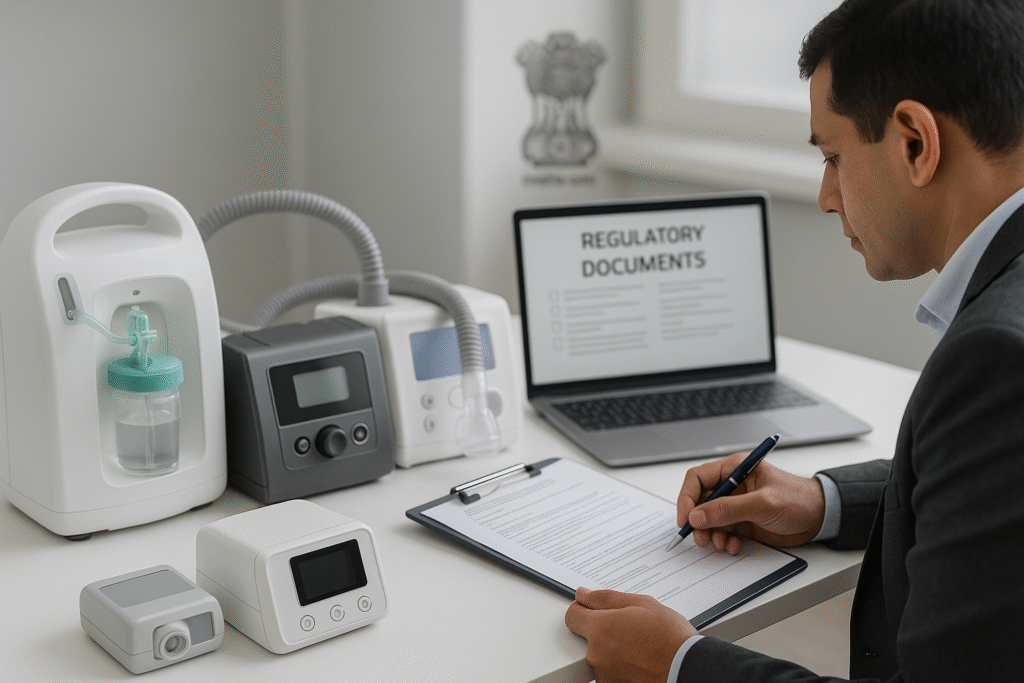
Respiratory devices have become central to India’s healthcare landscape, especially since the COVID-19 pandemic. Ventilators, oxygen concentrators, CPAP/BiPAP machines, and nebulizers were lifelines during the crisis, and today they remain essential in critical care, emergency response, and home healthcare.
With this heightened reliance comes stricter regulatory oversight. For manufacturers and importers aiming to enter the Indian market, securing CDSCO approval for respiratory devices is no longer optional—it is the gateway to market access, credibility, and patient trust.
Understanding the CDSCO Registration Pathway in India
India regulates medical devices under the Medical Device Rules (MDR) 2017, overseen by the Central Drugs Standard Control Organization (CDSCO). For respiratory devices, the registration pathway involves multiple layers of compliance:
1. Classification under MDR 2017
Most respiratory devices are classified as Class C or Class D, which represent higher-risk categories. This means they face greater scrutiny, including robust safety and performance evaluations before approval.
2. Licensing & Import Approvals
Whether you are a manufacturer or an importer, securing the right license is crucial. Importers require a CDSCO import license, supported by regulatory approvals from the country of origin such as a Free Sale Certificate (FSC). Locally manufactured products may also require BIS certification to meet Indian standards.
3. Documentation Requirements
The approval process hinges on technical documentation. Key submissions include:
- Device Master File (DMF) – covering product details, design, risk analysis, and performance validation.
- Plant Master File (PMF) – highlighting manufacturing practices, facilities, and quality systems.
- Clinical/Performance Data – especially important for higher-risk Class C/D respiratory devices.
4. Common Regulatory Challenges
Many companies face avoidable delays due to:
- Misclassification of devices under MDR 2017.
- Incomplete or inconsistent technical documentation.
- Delays in FSC verification or missing conformity evidence.
Business Impact of CDSCO Delays
Time-to-market is everything in the medical device sector. Delays in medical device registration in India can:
- Push back product launches.
- Disrupt supply chain and distribution timelines.
- Increase costs and reduce profitability.
For respiratory devices, where demand is high and patient needs are critical, even minor delays can mean lost opportunities.
Why Partner with Titans Medical Consulting?
At Titans Medical Consulting, we simplify the complex CDSCO registration pathway in India. Our team helps you:
- Navigate classification and licensing requirements.
- Prepare compliant DMF and PMF submissions.
- Address regulatory queries to avoid approval bottlenecks.
- Achieve faster, smoother CDSCO approval for respiratory devices.
We understand that compliance is not just about paperwork, it’s about enabling safe, timely access to life-saving technologies.
Conclusion
CDSCO approval is not just a regulatory formality, it is the key to market entry in India. For respiratory devices, the stakes are even higher, given their critical role in saving lives and the lessons learned from COVID-19.
By ensuring compliance with CDSCO medical device rules, manufacturers and importers can build trust, avoid costly delays, and maximize business opportunities.
Sources
Central Drugs Standard Control Organization (CDSCO)
Ministry of Health and Family Welfare, Government of India
Medical Device Rules, 2017 (as amended) – Gazette of India